
Best and Worst Gifts for Students with Cerebral Visual Impairments
Dec 16, 2025
Finding the perfect holiday or birthday present is difficult for any child. The challenge becomes much harder when shopping for students with
This list will help you choose items that support learning and fun without wasting money on products that do not work. (Note: The links attached are affiliate links to our amazon store in case you do plan on buying them, and I'll only attach links that I personally would recommend)
Understanding What Makes a Gift CVI-Friendly
Before we look at the specific products, we must understand the criteria for a good gift. Cortical Visual Impairment differs from ocular impairment because the issue lies in how the brain interprets what the eyes see.
A standard toy aisle in a store is often full of visual clutter. This clutter makes it impossible for a student with CVI to focus. The best gift for students with CVI simplifies the visual environment. It uses light and movement to capture attention.
We also look for toys that teach cause and effect. Many students with disabilities experience what we call "Fairy Godmother Syndrome." This happens when adults do everything for the child. Lunch appears out of nowhere. Toys appear in their hands without effort. A good educational toy requires the student to act to get a result. The student presses a button and a light turns on. They shake a rattle and they hear a sound. This builds concept development and independence.
Top Rated Gifts: Books and Literacy Materials
High Contrast Board Books


Rating: 5/5
Books remain one of the best tools for language and visual development. However, standard children’s books often have too many details on the page. I highly recommend the works of authors like Grace Anne and Jennifer Burma. These creators design books specifically for children who need high-contrast visuals.
Why These Books Work
The background in these books is simple. There are no distracting patterns that hide the main subject. One book by Jennifer Burma uses white numbers outlined in red against a black background. This use of red and high contrast helps anchor the student's visual attention.
These books also incorporate tactile elements. You can feel the texture of the images. This multi-sensory approach allows students who are visually impaired or deafblind to engage with the story using their hands. The books are board books. This makes them sturdy enough for a classroom environment where students might put items in their mouths or drop them.
Creating these materials yourself is possible. However, DIY projects often cost more time and money than purchasing a professionally made product. These books support small businesses and provide immediate, high-quality literacy materials for your student.
Visual Tracking Tools and Light Toys
Nutty Toys Light Up Pop-Up Tubes:

Rating: 4/5
Simple light toys often work best for encouraging visual attention. The LED spinners from Nutty Toys are a great example of an affordable and effective tool. These small devices light up and spin. They allow a student to track the movement of the light.
These toys are simple. They do not require complex motor skills to enjoy. They are also inexpensive. A box comes with four spinners. You can give one to multiple students without worrying if one gets lost or broken. The lights are bright enough to be seen but the device is small and portable. I deducted one point because they are purely for visual stimulation and do not offer deep educational complexity. However, they are excellent for visual tracking exercises.
The Light-Up Car Toy

Rating: 0/5
Some toys seem like a great idea but fail in execution. The light-up car I tested promised to be a fun visual tool. Unfortunately, the battery compartment was impossible to open. I have been a parent for 11 years and a teacher for 20. If I cannot open a battery compartment to make a toy work, it is not a useful gift. A toy that you cannot turn on serves no purpose for a student who needs light to see. I recommend avoiding this specific product.
Light-Up Gloves
Rating: 1/5
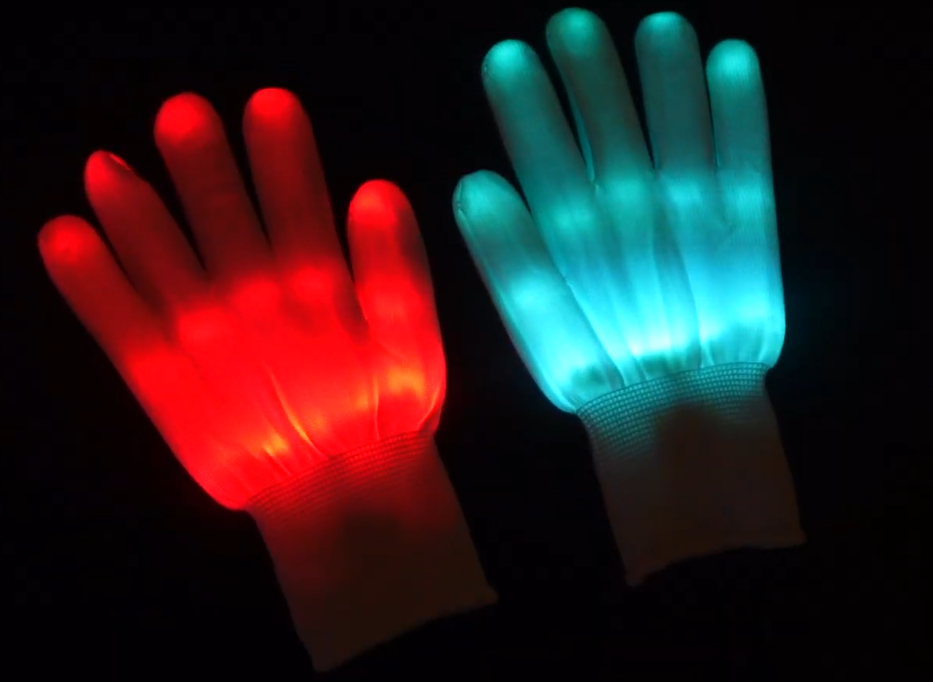
These gloves feature lights in the fingertips and a battery pack on the wrist. While they look fun in photos, they present practical issues for students with cortical visual impairment. The glove covers the child's hand. This blocks their ability to feel and explore the world.
Tactile exploration is essential for students with low vision. Putting a barrier between their skin and their environment limits their learning. The battery pack is also bulky and uncomfortable on the wrist. You might find a use for these by filling them with rice and hanging them as a visual decoration in a sensory room. However, I do not recommend them as a wearable gift for a child.
Teaching Cause and Effect Through Sound
Light-Up Tambourine
Rating: 4.5/5
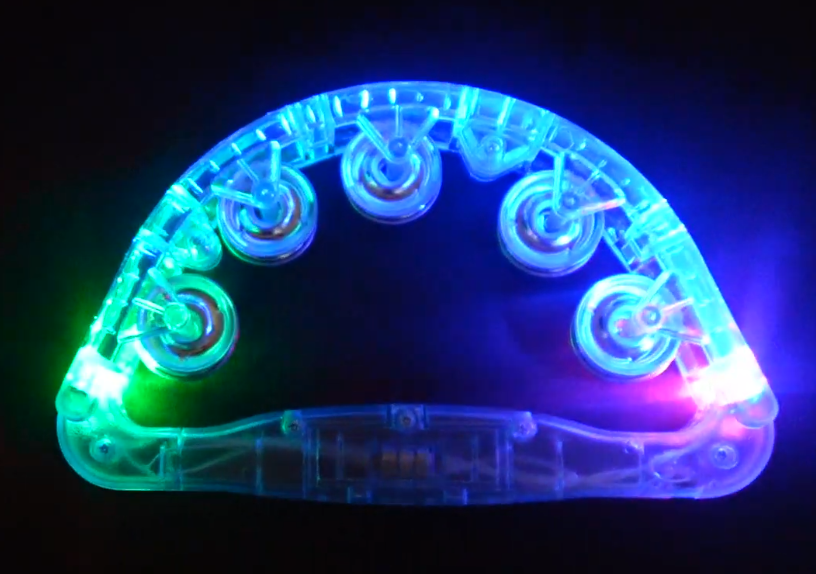
Musical instruments are excellent for teaching cause and effect. The light-up tambourine requires the student to move their hand to create sound. If they stop moving, the sound stops. This gives the student immediate feedback. They learn that their body impacts the world around them.
This specific tambourine also lights up. The combination of sound and light engages multiple senses at once. I gave this a high rating because it is durable and the cause-and-effect relationship is clear. The only downside is that the lights flash. Some students might find flashing lights irritating or difficult to process compared to a steady light.
Spiky Light Ball

Rating: 2/5
This ball lights up when you bounce it. It has a spiky texture that provides tactile input. Some students love the feeling of the spikes while others dislike it. The main issue with this toy is durability. The lighting mechanism in the unit I tested stopped working after two days. Gifts for students with cortical visual impairment need to be durable enough to withstand daily use. A light-up toy that stops lighting up becomes just a regular ball very quickly.
The Problem with Auditory Clutter
Crayola Mess Free Touch Lights

Rating: 1/5 (if using sound)
This product features a gel-like surface that lights up and plays music. It feels interesting to touch. The visual component is strong because it provides a backlit surface for drawing. However, the audio features are problematic.
The device plays music randomly when touched. This is a major issue. Students with visual impairments rely on their hearing to gather information about their environment. We call this "auditory information." When a toy makes random noises that do not connect to what the child is doing, it creates "auditory clutter."
This clutter confuses the student. They cannot focus on using their vision because their brain is trying to process the random music. If you buy this toy, I recommend using it only on the silent setting. On the silent setting, it works as a decent tactile and visual tool. With the sound on, it interferes with learning.
The Gold Standard: The Light Box

Rating: 5/5
The best item on this list is a traditional light box. This tool receives a perfect score because of its versatility. A light box provides a solid, illuminated white background. You place objects on top of it. The light shines through or around the object.
Why Every Classroom Needs One
Backlighting is a proven strategy for students with CVI. The light increases contrast. It draws the student's eye directly to the object. You can use a light box for art projects, looking at transparent shapes, or examining CVI friendly school supplies.
This tool supports learners of all ages. You can use it with a toddler exploring shapes. You can use it with a high school student for science diagrams. It requires a power source, which is a small limitation. However, you can use a portable power bank to make it mobile. This is a serious educational tool that functions as a fun activity center. It is worth the investment for any parent or teacher.
Common Challenges and How to Address Them
Managing Batteries and Power
Many sensory toys require batteries. This adds an ongoing cost and a maintenance task for parents. Toys like the light-up car fail because the battery access is poor. When choosing a gift, check how it is powered. USB rechargeable items or items that use standard batteries with easy-access doors are superior.
Supporting Students with Multiple Disabilities
Many students with CVI also have physical disabilities. A toy must be accessible. The magic ball wand I tested has a button to turn it on. However, the student cannot control the spinning once it starts. This limits the interaction. Toys that allow the student to turn them on and off easily are better for fostering independence. We want the student to be an active participant in play.
Collaboration Between Parents and Teachers
Teachers often have great ideas for gifts for students with CVI. Parents should feel comfortable asking their child's Teacher of the Visually Impaired (TVI) for recommendations. A TVI can explain the specific "CVI Phase" the child is in.
A child in Phase 1 might need simple, single-color objects against a black background. A child in Phase 3 might handle more complex backgrounds like the ones in the "Teach Me Colors" book. Collaboration ensures the gift matches the child's current visual abilities.
Final Thoughts
Selecting a gift for a student with visual impairments requires thought. You must look beyond the packaging. You must ask if the toy provides clear visual information or if it creates confusion.
The best gifts are simple. They are durable. They respect the child's intelligence by offering real cause-and-effect interaction. Books with high contrast, instruments that respond to movement, and light boxes are excellent choices. Avoid toys that act as "auditory clutter" or physically block the child's hands.
With these reviews, you can confidently choose a gift that your student will see, use, and enjoy.
Frequently Asked Questions about CVI Gifts
What is the best way to choose a toy for a child with CVI?
Look for items that light up or have high-contrast colors like red and yellow. Avoid toys with busy patterns or too many distinct colors mixed together. The toy should be easy to see against a simple black background.
Why do some toys distract students with CVI?
Students with CVI struggle with visual clutter. A toy that has too many lights, sounds, and patterns all at once can overwhelm their brain. This causes them to look away or close their eyes. Simple toys allow them to process what they are seeing.
How can teachers support parents in buying gifts?
Teachers can provide a list of the student's specific visual accommodations. Sharing information about the student's preferred colors and need for backlighting helps parents shop effectively.
Are expensive sensory toys worth the money?
Not always. A simple light box or a well-made board book often provides more value than an expensive electronic robot. The review above shows that simple items like LED spinners often work better than complex gadgets.
Where can I find CVI-friendly books?
Small independent creators often make the best materials. Look for authors like Jennifer Burma or Grace Anne who design specifically for this community. Their books use the high-contrast principles necessary for CVI learners.
